ISO 9001:2015
System certificate for the producing site on the PO. Incoming fabric lots, in-process bartack checks and outgoing carton audits are the records a buyer can request.

This page is the dossier path: ISO 9001:2015 quality system, amfori BSCI social audit, OEKO-TEX STANDARD 100 on named textiles, bluesign mill scope when it exists, and lab notes for hydrostatic head, zipper cycles and bartacks. It is not a forest story and it is not a net-zero pledge.
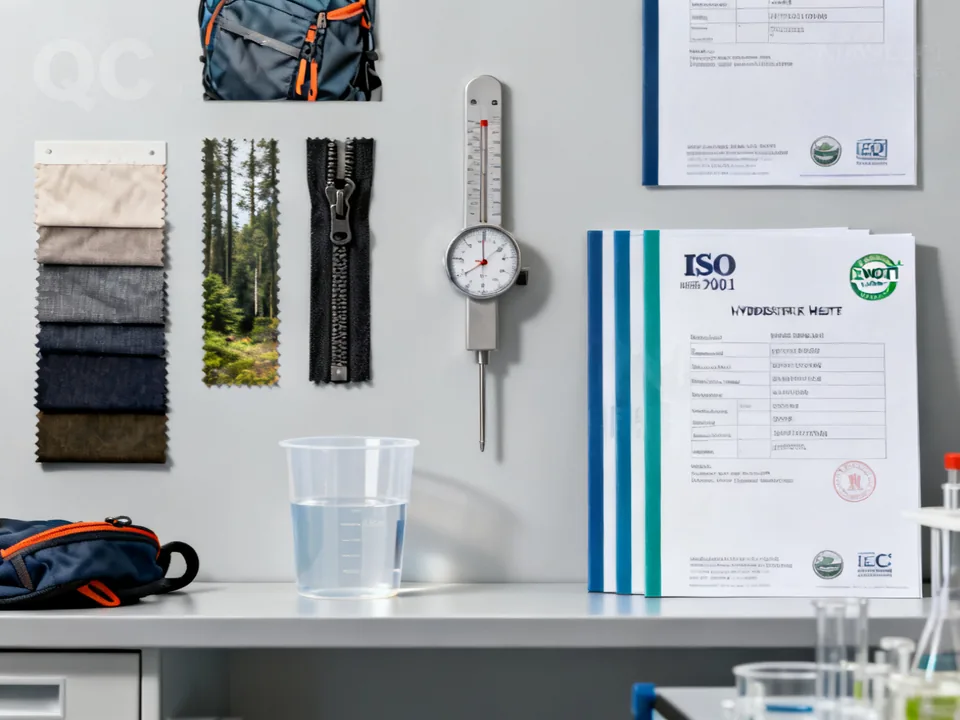
ISO 9001:2015 is the quality-management system. It is not a fabric certificate and it is not a hydrostatic-head number. amfori BSCI is the social-audit path for producing sites named on the purchase order. OEKO-TEX STANDARD 100 is cited only on named textile components; a zipper tape that is out of scope is listed as out of scope.
bluesign-approved mill inputs are cited with mill scope. If the mill letter does not cover the lot, the mark is not printed on the hangtag. Kids packs add CPSIA tracking language for North America; EN 71 is added only when a trim is toys-adjacent, not as a blanket on adult hiking packs.
We do not print “UL listed” or “USCG approved” on a nylon backpack. EN 15194 and UL 2849 belong to electric-mobility programs that are not this bag chassis. EN ISO 12402 buoyancy ratings belong to PFDs, not to a foam back panel.
Request a dossierThe industry still argues laminated waterproof membranes against DWR plus PU coating. That argument is treated as a BOM choice. A DWR+PU daypack can shed a shower and still wet out on a long alpine traverse. A laminated film raises hydrostatic head and stiffness. If the brief needs a dry pocket, millimetres are named. If it only needs DWR, the phrase “100% waterproof” is refused.
System certificate for the producing site on the PO. Incoming fabric lots, in-process bartack checks and outgoing carton audits are the records a buyer can request.
Social-audit report for the named site. A BSCI letter is not a substitute for textile testing and is not a factory-wide blanket for subcontractors not listed.
Component-level textile scope. Shell, lining and webbing are listed separately. Hardware that is out of scope stays off the hangtag sentence.
Rain covers and coated bases quoted at 800–3,000 mm when that construction is on the BOM. Uncoated ripstop stays in the water-resistant column.
Sample reports list cycle counts on the tape used in production. A colorway change that swaps tape restarts the count.
Broken bartacks and zipper failures can open a repair ticket. DWR fade and abrasion shine are wear. That boundary is written so claims desks do not argue from a lifestyle caption.
Stock-wholesale freezes this stack. Private-label OEM may change color and marks but not the rain-film type or torso-length grade without a new sample. Recycled nylon or polyester is offered when the mill lot holds the same denier; it is not a silent substitute for virgin 420D.
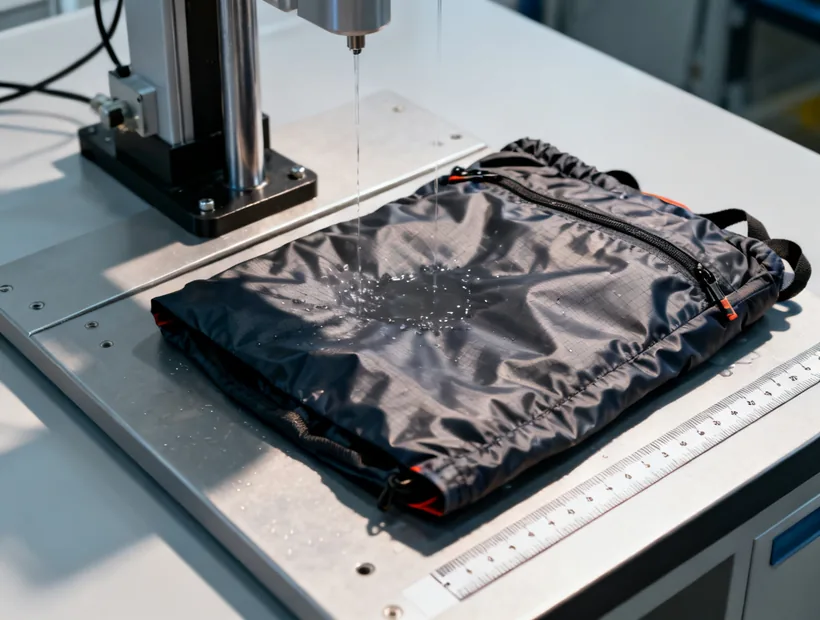
Limits we will put in the quote: DWR plus PU coating is not a dry-bag; laminated films add stiffness; a one-size foam pad is not a torso-length harness; kids 20 L packs do not inherit 70 L overnight copy; repair language is not unlimited cosmetic replacement. Hydrostatic-head cups, zipper-cycle fixtures and loaded torso-board checks are the sample methods; they are not a published third-party round-robin dataset.
If a buyer needs a method disclosure beyond the sample report, the pack desk will share the test environment (lab bench, filled rain-cover cup or loaded torso board), the instrument class, and the pass/fail rule used on that lot. A “2× more durable” headline is not invented without the method and the lab.
Ask for ISO / BSCI / OEKO-TEX scope, hydrostatic head, zipper-cycle notes and whether the program is stock-wholesale or private-label OEM. Dossiers leave within three business days when the SKU is named.